
Circular Economy in Practice: Simple Steps for Any Small Business to Get Started (Part 2): Closing the Loop – Logistics, Community & Measurement

The World Beyond Your Warehouse
In the previous installment of this series, we addressed the internal mechanics of the circular business model: auditing your value leaks, redesigning your material inputs, and embedding longevity into your product DNA. By optimizing these internal functions, you have established a foundation for a leaner, more resilient enterprise.
However, operational efficiency within your four walls is only half of the circular equation. The ultimate test of your model is what happens once your product leaves your facility and enters the hands of the customer.
The Circular Economy Shift: From Point of Sale to Product Stewardship
The traditional linear economy treats the "Point of Sale" as the definitive conclusion of the business relationship. In that model, your responsibility ends when the invoice is paid and the product is delivered. The Circular Economy, by contrast, operates on the principle of Product Stewardship. Here, the transaction is not an exit, but the beginning of a continuous partnership.
By taking responsibility for the product's entire lifecycle, you are not just selling an item; you are managing a utility. This shift allows you to maintain control over your assets, extract value even after the initial sale, and build a customer relationship that persists long after the product has left your warehouse.
The Goal of This Post
Transitioning to this extended model requires a new set of capabilities. In this post, we will master the external mechanics of circularity. We will explore how to implement Reverse Logistics to reclaim your materials, leverage Industrial Symbiosis to collaborate with other businesses, and utilize the Power of the Story to turn your sustainability initiatives into a measurable competitive advantage.

Step 4: Reverse Logistics – Bringing the Assets Home
In a linear model, the supply chain is a one-way street ending at the customer’s door. In a circular model, we implement Reverse Logistics—the infrastructure required to facilitate the return of products and materials back into your production cycle.
For the SME, this is not a "return" in the traditional sense, which often implies a defective product or a lost sale. Instead, it is a Resource Recovery, an opportunity to reclaim high-value assets that you have already paid for and processed.
Actionable Models for SMEs
You do not need a global logistics fleet to begin recovering assets. Many SMEs find success by starting with one of these three targeted models:
Strategic Take-Back Programs: Incentivize the "return loop" by offering customers a discount or store credit when they return used units or specialized packaging. This ensures the material returns to a facility where you can control its next life, while simultaneously driving repeat business.
The "Renewed" Revenue Stream: Establishing a small-scale refurbishment center allows you to inspect, repair, and re-certify returned items. By creating a "Renewed" or "Certified Pre-Owned" section on your website, you can capture a secondary market segment at a higher margin, as the primary material costs were already covered in the initial production run.
The Packaging Pivot: For businesses with local or recurring deliveries, consider moving toward reusable shipping crates or mailers. Inspired by the "Loop" model, these containers are designed to be sent back, sanitized, and reused dozens of times, eventually eliminating the ongoing cost of single-use cardboard and plastic.
The Financial Win: Reclaiming Technical Nutrients
The most compelling business case for Reverse Logistics is the recovery of Technical Nutrients. Valuable materials—such as specialty metals, electronics, and high-performance textiles—often retain their integrity long after the product's first use.
By bringing these assets "home," you are essentially mining your own past sales. Recovering these materials typically costs a fraction of the price of purchasing virgin resources on the open market. This creates a "Circular Subsidy" for your business: the more you recover, the lower your future material costs become.

Step 5: Industrial Symbiosis – Your Waste, Their Resource
In a natural ecosystem, no organism exists in a vacuum; every byproduct is utilized by another part of the system. Your business should operate with the same logic. Industrial Symbiosis is the collaborative process of sharing resources, energy, and byproducts between independent companies to increase collective efficiency.
For the SME, this strategy is particularly effective because it allows you to solve waste problems through local partnerships rather than expensive, large-scale industrial processing.
Collaboration Strategies for the Local Economy
By identifying "Resource Matches" within your immediate business community, you can turn a liability (waste) into an asset for someone else—or vice versa.
The "Local Loop": This involves a direct exchange of materials between neighboring businesses. A classic example is a craft brewery providing spent grain to a local bakery for specialized flour or to a nearby farm for high-protein livestock feed. In these loops, the "waste" producer eliminates disposal fees, and the "receiver" gains a high-quality input at a significantly reduced cost.
Sharing the Infrastructure Burden: High-performance circularity sometimes requires specialized equipment—such as industrial composters, plastic shredders, or specialized logistics software. For a single SME, the capital expenditure may be prohibitive. However, by co-investing with other local businesses, you can share the cost and the utility of the equipment, lowering the barrier to entry for the entire group.
The "Upcycle" Partnership: Many production processes result in high-quality "scraps" that are too small for your primary product line but are perfect for others. By identifying local artisans or secondary manufacturers (e.g., a furniture maker providing leather offcuts to a boutique accessories brand), you ensure your materials stay at their highest possible value rather than being downcycled or discarded.
The "Circular Hub" Advantage
When businesses collaborate in this way, they create a Circular Hub. This localized network is more resilient to global supply chain shocks because its primary resources are circulating within a few miles rather than across oceans.
Step 6: Measurement & Transparency – Telling the Circular Economy Story
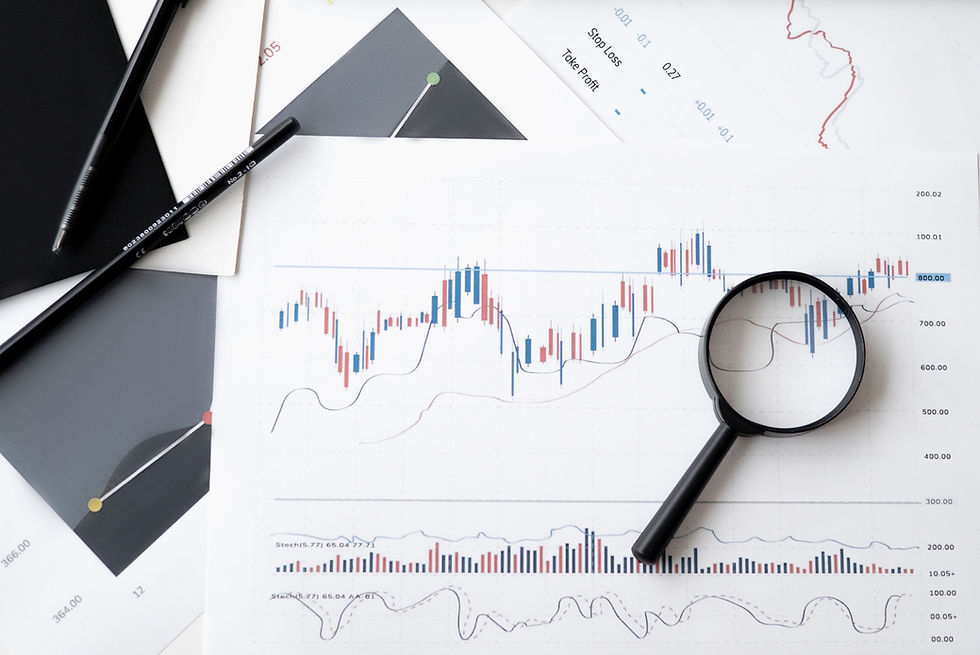
The business logic of the Circular Economy is clear: If you do not measure your progress, you cannot market your success. In 2026, stakeholders are no longer satisfied with vague "eco-friendly" claims. They require data-backed evidence of your operational resilience and environmental stewardship.
By tracking a few key metrics, you can transform your internal efficiencies into a powerful narrative that builds brand equity and justifies a premium position in the market.
Simple KPIs for the Busy SME
You do not need a dedicated sustainability department to track your impact. Focus on these three high-signal Key Performance Indicators (KPIs):
The Circularity Rate: This is the most direct measure of your model's health. Calculate what percentage of your total material inputs are recycled, reused, or bio-based versus "virgin" materials. A growing circularity rate is a direct indicator of reduced supply chain risk.
Waste Diversion Volume: Track the total weight (pounds or tons) of material your business has successfully kept out of landfills each quarter. Whether through reuse, industrial symbiosis, or specialized recycling, this number represents the "unrecovered investment" you have successfully captured.
The "Energy Avoidance" Calculation: Refurbishing an existing product typically requires significantly less energy than manufacturing a new one from raw materials. By calculating the energy saved through your repair or refurbishment programs, you can provide a simplified "Carbon Save" metric that resonates with climate-conscious B2B clients and consumers.
The "Greenwashing" Guardrail: Authenticity Over Perfection
In the "Trust Economy," vulnerability is more effective than a polished facade. One of the greatest risks to an SME is the temptation to overstate its circularity.
Practice Radical Transparency: If you are still at 20% circularity, say so. Share the challenges you are facing in sourcing specific materials or setting up return loops.
The Trust Dividend: When a business is honest about its journey—including its hurdles—it builds a level of credibility that "perfect" marketing cannot touch. Your customers are more likely to support a brand that is transparently improving than one that claims to have solved every environmental problem overnight.

Real-World Inspiration: SME Circular Champions
The transition to circularity is already being led by agile small and mid-sized enterprises across various sectors. These businesses demonstrate that "closing the loop" is a viable strategy for growth, customer retention, and operational resilience.
Case Study 1 (The Maker): Emeco
The Strategy: Material Intelligence and "Planned Permanence"
Emeco is an American furniture manufacturer that has built a global brand around the concept of "making things that last." Their iconic 1006 Navy Chair is made from 80% recycled aluminum—a "technical nutrient" that can be recycled indefinitely.
The Circular Edge: By focusing on extreme durability and high-recycled content, Emeco has decoupled its brand from the "fast furniture" cycle. They offer a lifetime guarantee, proving that a business model based on products that don't need replacing can still be highly profitable through premium positioning and institutional contracts.
Case Study 2 (The Service): Iron Mountain (Asset Lifecycle Management)
The Strategy: Reverse Logistics and Refurbishment
While Iron Mountain is a large organization, their Asset Lifecycle Management (ALM) division provides a blueprint for any service-based SME dealing with hardware. They specialize in the secure decommissioning, data destruction, and remarketing of IT assets.
The Circular Edge: Instead of treating old laptops and servers as electronic waste, they refurbish and resell them, extending the product life of hardware. For a service-based SME, adopting this "refurbished-first" procurement policy for internal operations immediately lowers capital expenditure and reduces the "invisible waste" of the digital workflow.
Case Study 3 (The Retailer): Eileen Fisher (Renew Program)
The Strategy: Take-Back Loops and Resale Revenue
Eileen Fisher’s "Renew" program is a pioneer in the "brand-led resale" space. They incentivize customers to return their worn garments in any condition in exchange for store credit.
The Circular Edge: The brand then cleans, repairs, or "over-dyes" the garments to sell them in a dedicated "Pre-Loved" section. This creates a secondary revenue stream from the same physical item and attracts a price-sensitive, eco-conscious demographic that might not otherwise purchase the brand at full retail price.
Conclusion: The Engine of Resilience
Throughout this series, we have mapped the transition from a linear "Take-Make-Dispose" model to a high-performance circular system. We began with the financial "Why," establishing circularity as a hedge against volatility and a gateway to "green" capital. We then moved into the "Internal Blueprint," identifying value leaks and redesigning your product DNA. Finally, we have explored the external ecosystem—mastering reverse logistics, industrial symbiosis, and the power of data-backed storytelling.
The conclusion is clear: Circularity is the ultimate "future-proofing" tool for the modern SME. By closing your operational loops, you are doing more than just reducing your environmental footprint. You are building an engine of resilience that is decoupled from resource scarcity, insulated from supply chain shocks, and deeply connected to a loyal, trust-based customer base. At Purshia Peak Strategies, we believe that the businesses that thrive in the coming decade will be those that treat their resources not as consumables, but as perpetual assets.
What’s Next?
We have provided the strategic roadmap and the operational tactics. However, we recognize that the path from "knowing" to "doing" is rarely a straight line. Often, the greatest barrier to circularity isn't a lack of technology or capital—it is the friction of existing habits and traditional business mindsets.
The next post in our series we'll cover Overcoming the 'Mindset Gap,' we will tackle the real-world challenges of implementation. We will discuss how to manage internal resistance, navigate the "Perfection Trap," and lead your team through the cultural shift required to make circularity a permanent part of your company’s identity.

Start your journey towards a sustainable business with these FREE tools. 👇
Additional Resources
Books
Coursera Courses
Websites
References
European Circular Economy Stakeholder Platform. (2025). SME success stories: The financial impact of industrial symbiosis. https://circulareconomy.europa.eu/platform/en
Gartner. (2025, March 18). Gartner identifies top supply chain technology trends for 2025. https://www.gartner.com/en/newsroom/press-releases/2025-03-18-gartner-identifies-top-supply-chain-technology-trends-for-2025
Gartner. (2026, January 9). Beyond supply chain 2026 predictions. https://www.gartner.com/en/supply-chain/insights/beyond-supply-chain-blog/beyond-supply-chain-2026-predictions
Research and Markets. (2026). Circular economy global market report 2026. https://www.researchandmarkets.com/reports/6072064/circular-economy-market-report
World Economic Forum. (2025, November 12). Circular transformation of industries: The art of scaling circular supply chains. https://www.weforum.org/publications/circular-transformation-of-industries-the-art-of-scaling-circular-supply-chains/
World Economic Forum. (2026, March 12). Why the circular economy is experiencing a renewal moment. https://www.weforum.org/stories/2026/03/circular-economy-economic-industrial-strategy/


Comments